


Nutrients
Nutrients are very important for all plants to grow and thrive. Each of these nutrients have a specific job to do for the plant. Cannabis requires different levels of nutrients depending on the cycle it is in. For example, when in vegetative stage, it requires more nitrogen than in the flower stage. But in the flower stage it requires more phosphorus than the vegetative stage. You may hear the term NPK ratio - this stands for Nitrogen, Phosphorus, and Potassium ratio which are the 3 main nutrients needed for cannabis. In the vegetative stage you should be at a NPK ratio of about 3:1:2 - this means 3 parts Nitrogen, 1 part Phosphorus, and 2 parts Potassium. During the early stages of flowering that should change to 1:3:2. The last couple weeks of flower, you want to basically remove the nitrogen all together. There are pre-made nutrients made by different companies specifically for cannabis at their different stages of growth to make it easier that you can purchase.
The PH of your nutrient water is important for the plant to be able to uptake the nutrients. The PH range you want to keep your water at when growing in soil is between 6.0-7.0. When growing in soilless medium (like coir coir) or hydroponics you want the PH to be between 5.5-6.5.
Below is a list of nutrients required by the cannabis plant and what each nutrient does for the plant:
Major Nutrients (Macro Nutrients)
Nitrogen - Essential for vegetative growth. Promotes stem, shoot and leaf growth. It is the key component of chlorophyl and amino acids.
Phosphorus - Helps maintain stem and branch strength and assists in photosynthesis. Crucial for energy transfer and root development. Also supports flower formation during flower stage.
Potassium - Regulates water, CO2, and enzyme activity. It assists in photosynthesis and is necessary for the development of strong stems and roots. Potassium builds cellulose and improves resistance to stress, drought and pests. During flower it helps the buds to be robust and dense.
Secondary Nutrients
Calcium - Is essential for stabilizing cell walls. It regulates enzyme and hormone activity. Helps with strong root growth and resistance to stress.
Magnesium - Magnesium is the essential building block of chlorophyll so it is necessary for photosynthesis and energy production. Helps synthesize proteins and regulates enzyme activity.
Sulfur - Plays a role in forming enzymes, proteins and vitamins. It assists with nitrogen processing and helps regulate hormones. It is also involved with producing terpenes.
Micronutrients
Iron - Assists in the synthesis of chlorophyll.
Zinc - Zinc is the building block of auxin hormones. Auxin hormones regulate growth and development and overall plant morphology. It regulates internodal lengths.
Boran - Helps to create strong roots and helps with cell wall formation. Helps with sugar transport and with carbohydrate and protein metabolism. Also participates in the synthesis and utilization of auxins.
Copper - Assists with photosynthesis which leads to better growth and plant health. It produces lignan Contributes to the color and flavor of cannabis. It also has antifungal properties, so it acts like a fungicide.
There are a couple more things you can add to your soil to help your plant be the best it can be. Keep in mind, these items contain living matter so if you use tap water, this may not be a good option for you. The chlorine in the water will kill the living organisms that are in these options. They are below:
Mycorrhizal Fungi - This fungus creates a symbiotic relationship with the roots of the plant. It improves nutrient absorption, water uptake and increases stress tolerance for plant.
Beneficial Bacteria - They break down organic matter in the soil and fix nutrients for the plants. They form a symbiotic relationship with the roots enhancing nutrient uptake. They also help in fighting toxins, pests, and diseases.
Nutrient Deficiencies
Sometimes a plant can get a nutrient deficiency. It is important to catch the deficiency as early as possible to rectify the problem as quick as possible. When that happens, it is not always the easiest to know what nutrient is deficient because some nutrient deficiencies look similar to others. Below we will discuss the different deficiencies and how to possibly resolve them. Alot of the time, the best thing to do is search on-line for pictures of nutrient deficiencies to compare with what you're dealing with. The first thing to think about is the PH of the nutrient water you are using. It should be between 6.0-7.0 when using soil, and 5.5-6.5 when using soilless medium or hydroponically.
Nitrogen Deficiency
The leaves will start to pale and yellow with darker veins and will start towards the bottom of the plant. The leaves start to curl upwards. As it gets worse the yellowing can travel up the plant and the lower leaves may fall off. If not addressed the leaves can develop tiny purple spots on leaves, stems and branches.
Solution: Use pre-mixed nutrients from store which contain nitrogen. You can also use nitrate of soda or organic fertilizer.

Phosphorus Deficiency
The leaves will turn dark green, especially towards the bottom of the plant. Then yellowing of the leaves with possible brown spots, in some cases you will see dead spots. You may notice red or purple stems (keep in mind that some strains do grow and have reddish-purplish stems). The leaves will start to curl downwards. It will lead to stunted growth and poor root development.
Solution: Check the PH of your soil at the roots and make sure it is between 6.2-7.0 which is the best range for phosphorus uptake. Having temps below 60F or large temperature swings can make it hard for plant to absorb phosphorus. Do not over water your plant, that could also cause the roots to have problems uptaking nutrients. If all above is good, you can try to add a little more phosphorus to your nutrient regimen. You can also add things like earthworm casting, fishmeal or soft rock phosphate which are high in phosphorus.

Potassium Deficiency
The older leaves will start to yellow or brown at the edges. Brown spots can be seen on the leave (known as necrosis). Leaves may curl and twist inwards and turn necrotic and brittle. May exhibit weak stems.
NOTE: Sometimes a Potassium deficiency can be caused simply by stress, like overwatering, heat or transplant and may clear up on its own after stress is gone. If you only see 1 or 2 leaves towards the bottom and problem is not spreading, I would not worry about it.
Solution: First, make sure it is not light burn - they look almost exactly the same. Try moving the light a couple of inches more away from plant to see that resolves the issue. Do not overwater, it can cause roots to have a problem uptaking nutrients. Also, too much nutrients could be a factor. High levels of calcium, magnesium, or sodium can interfere with potassium uptake. This is called nutrient lock. You can flush your plant and watering system to get out any access nutrients and continue your nutrient regimen. If there is in fact a potassium defiency you can add potassium sulfate or potassium nitrate to grow medium. Kelp meal or wood ash are also high in potassium.

Magnesium Deficiency
The leaves will look pale green to yellow between the veins, the is known as interveinal chlorosis. The edges of the leaves will start to turn brown and crispy. May get spots that are light brown or rusty colored as deficiency progresses.
Solution: Make sure the PH level of the root zone is between 6.0-7.0 so the plant can uptake the nutrients properly. If that is not the problem you can add a little Epsom salt to your soil. Keep in mind that Calcium and Magnesium work hand in hand, so when you have a deficiency of either, a lot of growers usually add both nutrients to alleviate the problem. There are Cal/Mag nutrient mix that is made by companies that you can purchase.

Calcium Deficiency
The leaves will get brown or bronze spots particularly on the upper leaves. The leaf tips may start to curl. Then yellow spots on the leaves may develop.
Solution: Calcium can sometimes get locked out by PH levels being lower than 6.2, the plant is not able to uptake it easily. Make sure levels are 6.2 or above. If that is not the problem, you can add dolomite lime as a supplement. Keep in mind that Calcium and Magnesium work hand in hand, so when you have a deficiency of either, a lot of growers usually add both nutrients to alleviate the problem. There are Cal/Mag nutrient mix that is made by companies that you can purchase.

Sulfur Deficiency
Sulfur deficiencies are pretty rare but can still happen. Newer leaves will start turning yellow, make sure it is not light burn - it can look similar. As it progresses the yellowing will spread to entire plant. If not addressed the underside of the leaves will turn a reddish-purple to a brown color and at that time it is more than likely unfixable.
Solution: Make sure the PH level when adding nutrients is between 6.0-7.0. If that is not the problem, you can add 1-2 teaspoons of Epsom salt to water when watering your plants. Another solution is flushing your soil with pure water to flush out some existing nutrients in the soil. Sometimes too much nutrient in your soil can cause nutrient lockout. Then give nutrient water at the correct PH level and that should resolve a nutrient lockout if that is the problem.

IIron Deficiency
An Iron deficiency is usually caused by a PH issue but can also be caused by stress to the plant. Once the stressor is gone, it can clear the problem up on its own. The newer leaves will turn a pale yellow, sometime almost white as problem progresses.
Solution: Make sure PH of root zone is between 6.0-7.0. If that is not the problem, then you can add iron chelates to your water to help the issue. Nutrient lock is another possibility so you can flush your soil with pure water to flush out existing nutrients in the soil. Then give your nutrient water at the correct PH level.
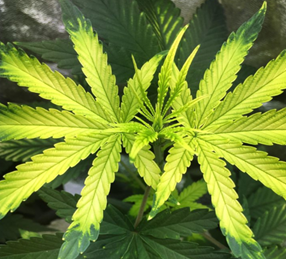
Zinc Deficiency
The leaves will get a yellowing of the newer leaves. Leaf tips start to discolor and start dying. Reduced leaf size at the newest growth, Leaves may take on a banded appearance.
Solution: Make sure PH of root zone is between 6.0-7.0. Nutrient lock is another possibility so you can flush your soil with pure water to flush out existing nutrients in the soil. Then give your nutrient water at the correct PH level. Natural ways to add Zinc to your soil is kelp meal or alfalfa meal.
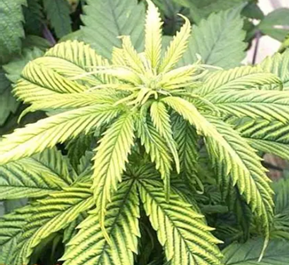
Boran Deficiency
Boran deficiencies are very uncommon. The leaves will turn lighter green or yellowish color. There may be yellowing along the edges of newer leaves along with yellow or brown spots. This will progress through plant if not addressed. Growth tips and buds begin to brown and die off. The stems will become very brittle.
Solution: Usually Boran deficiencies are cause by PH issues or underwatering. Make sure your PH level is at 6.0-7.0 and that you have good watering practices. Boran does not uptake well if there is not enough moisture. Also, humidities below 25% make it harder for plant to uptake boran. If all the above is good, nutrient lock is another possibility, you can flush your soil with pure water to flush out existing nutrients in the soil. Then give your nutrient water at the correct PH level.

Copper Deficiency
Copper deficiencies are uncommon to have. The leaves will start to get a bluish to purplish tone. The veins and leaf stems will start to turn purple. Please note that some strains genetically have purple stems so it is important to know the strain you're growing. Leaf tips may twist or curl. Then you would see yellowing that would spread through plant as it progresses. Brown spots will follow with necrosis to the leaves.
Solution: Make sure PH of root zone is between 6.0-7.0. Nutrient lock is another possibility so you can flush your soil with pure water to flush out existing nutrients in the soil. Then give your nutrient water at the correct PH level. If that does not work you can add chelated copper to your soil. Copper is a macro nutrient so not a lot is needed. Add a little, not a lot to start - less is better.
